
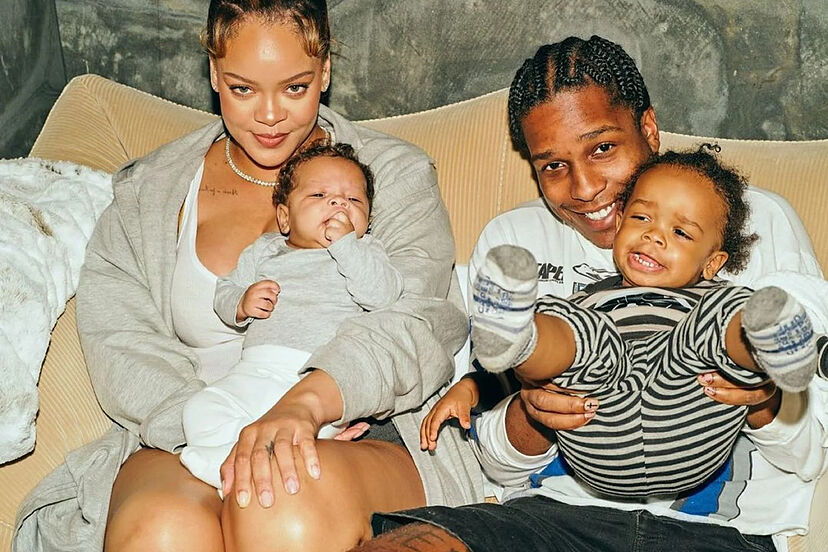


Rihanna has two sons with A$AP Rocky: RZA, born in May and now three years old, and Riot Rose, born in August and currently two. The couple announced in May that they are expecting their third child. The story here revolves around how Rihanna balances a global business empire with active motherhood, all while managing public curiosity about her family.
This case offers a masterclass in selective disclosure and brand alignment across personal and professional domains. The operational complexity of managing Fenty Beauty, Savage X Fenty, and a music career while raising young children provides insight into how elite performers structure their lives around competing priorities.
What’s particularly notable is how Rihanna has transformed motherhood into a brand extension rather than a career interruption. Her approach challenges traditional narratives about professional sacrifice.
Age Transparency And The Strategy Of Delayed Confirmation
Rihanna and Rocky did not publicly reveal RZA’s name until more than a year after his birth. That delay illustrates a protective strategy: withholding identifying details until the child’s existence is already normalized in the public consciousness.
From a practical standpoint, this approach reduces the initial feeding frenzy. By the time the name is confirmed, the novelty has diminished, and media attention is less intense. The market for unauthorized images and information declines when official channels have already satisfied baseline curiosity.
What I’ve learned is that controlling the confirmation timeline allows public figures to dictate terms. Rather than reacting to leaks or speculation, they announce on their own schedule, preserving a sense of agency. This isn’t about secrecy. It’s about maintaining operational control over information flow.
The naming itself carries cultural significance. RZA references Wu-Tang Clan founder RZA, a deliberate nod to hip-hop heritage that Rocky has publicly acknowledged. Riot Rose follows a similar pattern with strong phonetic impact and cultural resonance.
Public Pregnancy Announcements And The Proof Of Strategic Timing
Rihanna revealed her first pregnancy during a New York City photo walk, her second during the Super Bowl halftime show, and her third at the Met Gala. Each announcement was embedded in a high-profile public moment, maximizing control over narrative framing.
Look, the bottom line is that announcing during major events ensures the story unfolds on your terms. The surrounding context shapes how audiences interpret the news, and embedding it in celebratory or high-visibility moments generates positive association. The Super Bowl announcement reached over 100 million viewers, converting what could have been tabloid speculation into a cultural moment.
Here’s what actually works: leveraging existing attention rather than creating standalone events. Rihanna didn’t hold press conferences. She integrated family news into moments already saturated with media coverage. The Met Gala announcement functioned similarly, tying the pregnancy reveal to fashion’s most visible annual event.
This approach also creates commercial opportunity. The outfits worn during these announcements become instant cultural artifacts, extending brand value beyond the announcement itself. When pregnancy becomes fashion spectacle, it transcends personal news and enters commercial territory.
Child Visibility And The Risk Of Overexposure Versus Relatability
RZA appeared on the cover of British Vogue with Rihanna when he was nine months old. Riot has been photographed in public on multiple occasions. This selective visibility balances audience demand for access with protective instincts.
The reality is that complete invisibility can fuel intrusive paparazzi behavior. Controlled visibility satisfies curiosity in managed doses, reducing the incentive for unauthorized capture. The British Vogue cover functioned as both protective measure and brand moment, providing high-quality images that saturated the market for unauthorized content.
What’s interesting is how these appearances function as brand moments. When children are styled in designer clothing or appear in fashion contexts, they extend the parent’s commercial identity without explicit endorsement deals. RZA and Riot have been photographed in Gucci, Dior, and other luxury brands, creating aspirational imagery that reinforces Rihanna’s fashion authority.
The line between family documentation and brand content becomes deliberately blurred. Road trip photos shared on social media generate millions of engagements, creating value that traditional advertising couldn’t replicate. Authenticity becomes commodified, but the audience accepts it because the content appears spontaneous rather than manufactured.
Parenting Narratives And The Pressure Of Personality Differentiation
Rocky has described their sons’ distinct personalities: RZA prefers books and solitude, while Riot is energetic and vocal. These characterizations humanize the children while maintaining privacy about specifics like schooling or routines.
From a reputational standpoint, sharing personality traits creates relatability without operational risk. Audiences connect with behavioral descriptions in ways they can’t with physical locations or daily schedules. These anecdotes function as controlled intimacy, offering perceived access without actual vulnerability.
I’ve seen this tactic deployed effectively across sectors. Leaders who share process insights without revealing proprietary details maintain transparency without vulnerability. The same principle applies here: character descriptions provide connection without compromising security.
Rocky’s comments also serve relationship-building functions. By publicly celebrating his sons’ individuality, he reinforces his identity as an engaged father, countering potential criticism about prioritizing career over family presence.
Third Pregnancy Cycle And What The Timing Reveals
The announcement of a third pregnancy, just two years after Riot’s birth, signals intentional family building within a compressed timeline. This pace is notable for individuals managing global careers simultaneously. Three children under four years represents rapid succession by any standard.
Here’s what the data tells us: rapid successive pregnancies often indicate deliberate clustering, allowing parents to complete family expansion within a defined window before resuming full professional intensity. This approach treats early childhood as a consolidated phase rather than an ongoing decade-long process.
What I’ve learned is that this approach treats family building as a strategic project with defined timelines and resource allocation, much like product launches or market expansions. It’s efficient, but requires significant support infrastructure to execute. Nannies, assistants, security, and domestic staff become operational necessities rather than luxuries.
The announcement timing at the Met Gala also functioned as market signaling. By revealing the pregnancy publicly rather than allowing speculation to build, Rihanna controlled the narrative before tabloids could frame it. The fashion context reinforced her continued professional relevance despite approaching three children.